 Alysa Segovia
 Sunrise vs. Sunset: When Should You Elope in Shenandoah?
A real comparison of sunrise and sunset elopements in Shenandoah National Park — light quality, crowds, logistics, and which overlooks work best for each.
Almost every couple who reaches out asks some version of this question: sunrise or sunset?
It’s the right thing to ask. The decision affects which ceremony locations make sense, how the day is structured, what kind of light you’ll have for photographs, and whether you’re comfortable with a 4am alarm.
Here’s how I actually think about it.
What sunrise looks like in Shenandoah
A Shenandoah sunrise elopement starts in the dark.
You’re driving Skyline Drive before the gates are staffed. The forest is black on both sides of the road. There’s usually mist settling into the valleys — you can see it from the car if you drive slowly enough. By the time you reach the trailhead, the sky is starting to differentiate: dark gray above, a faint blue-purple at the horizon.
You hike in with a light. The trail is quiet in a way that it will not be again for the rest of the day. No other footsteps. No voices. Just the two of you and the sound of the forest at 5am.
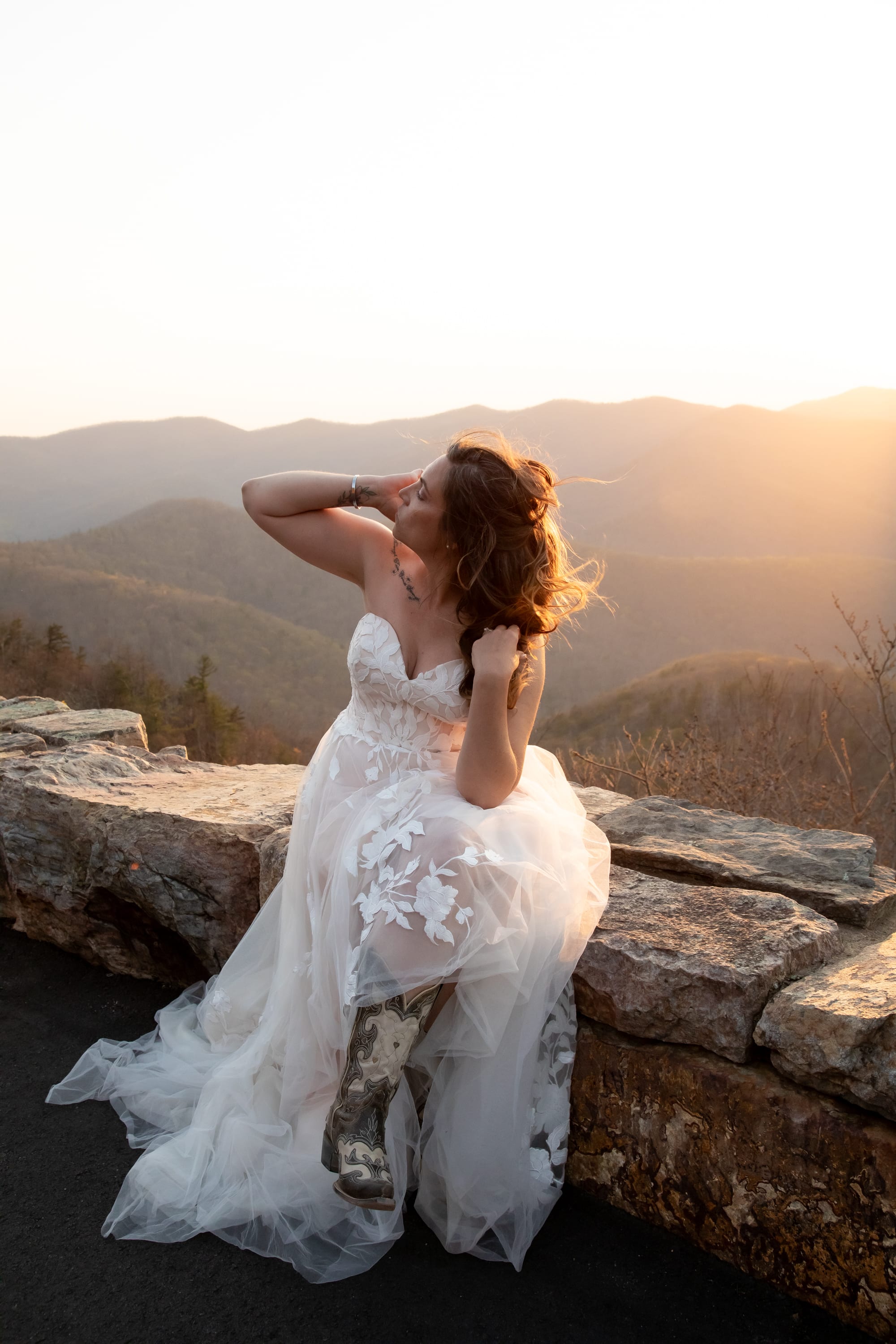
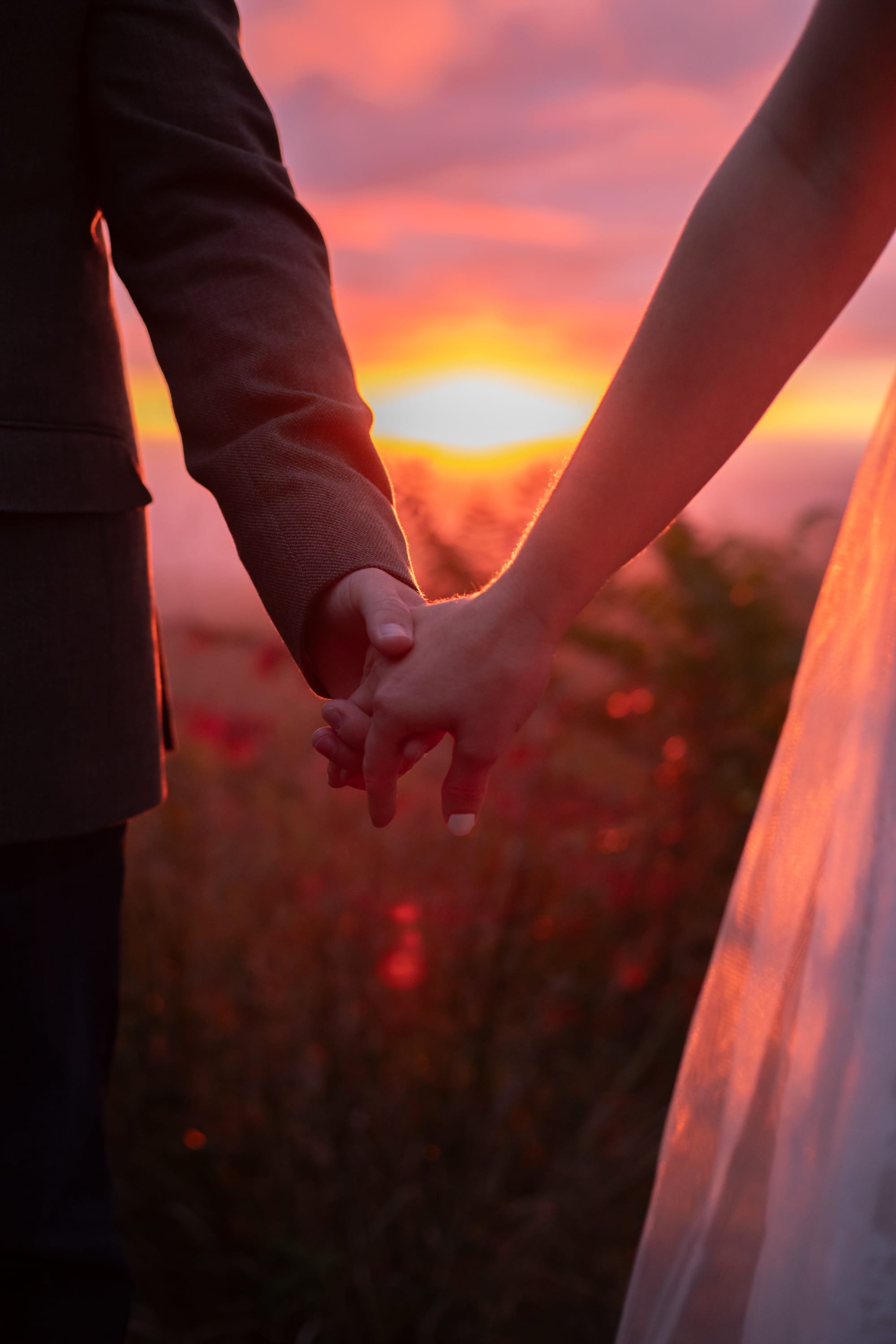
Then the sky changes. Pink at first, low on the horizon. Then orange. Then the sun clears the ridge and the light hits everything at once — golden, raking, moving across the landscape in real time. This lasts about fifteen minutes. After that, the light softens into the warm, even quality of mid-morning, which is excellent for portraits in its own different way.
The distinctive quality of Shenandoah sunrise: The park runs north to south along the Blue Ridge, and east-facing overlooks and summits are scattered throughout its entire length. At those locations — Stony Man, Marys Rock, and many others along Skyline Drive — the light comes directly to you. You’re not waiting for the sun to crest a ridge in the distance. It rises right over the valley floor and hits the overlook head-on.
What sunset looks like in Shenandoah
A sunset elopement has a different shape to the day. You sleep in. You get ready without rushing — hair, dress, each other. There’s a slowness to the morning that’s its own kind of beautiful, unhurried in a way that wedding days rarely are. You have a real lunch. By 2 or 3pm, you’re driving into the park.
One thing to plan for: people stay for sunset. Day visitors, hikers, and families who arrived in the afternoon often linger at overlooks to watch the light change — they’re not leaving before the show. On weekends, popular spots can be crowded during the golden hour window. Weekdays are significantly quieter and give you a much better chance of having an overlook to yourselves.
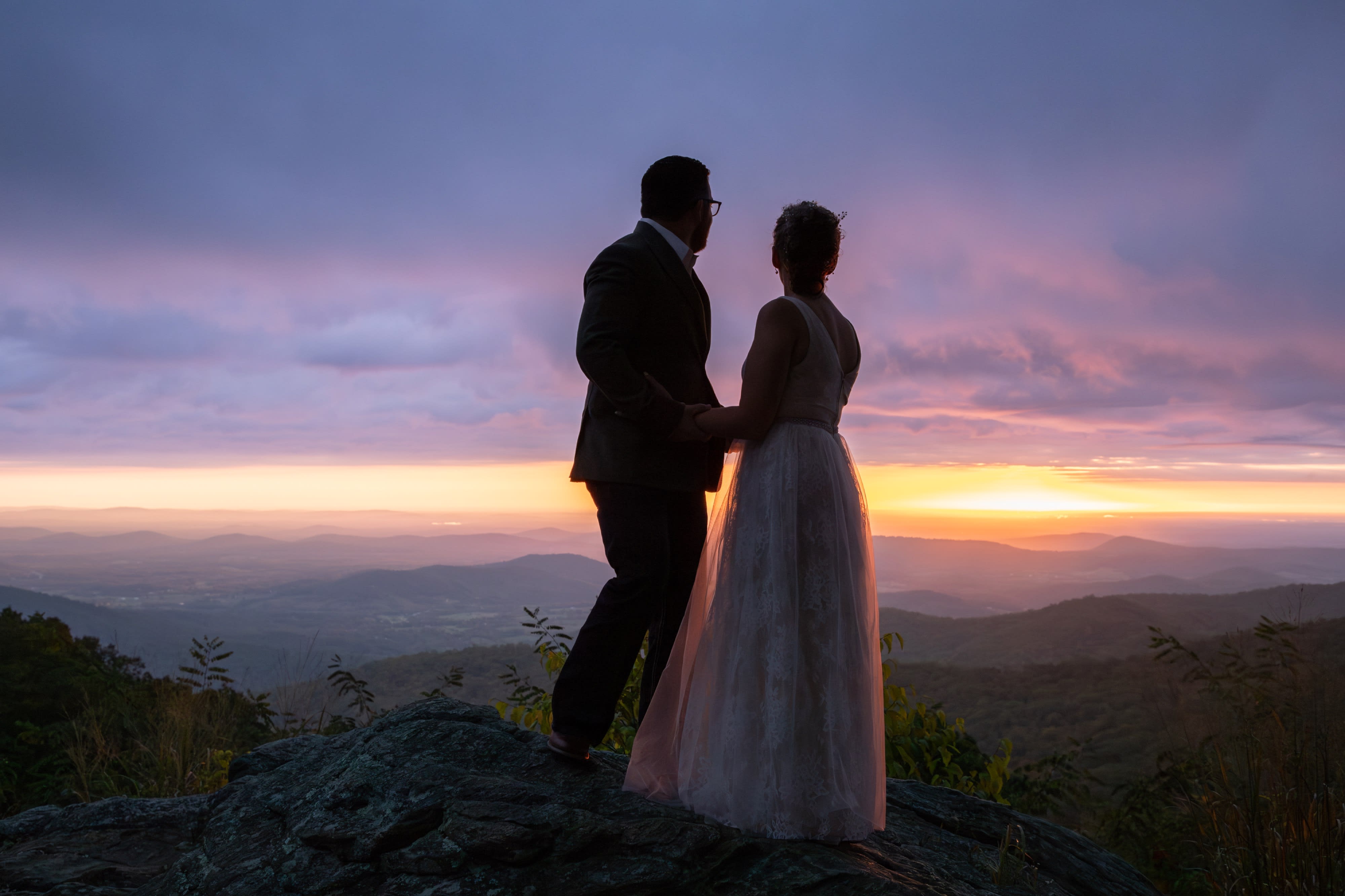
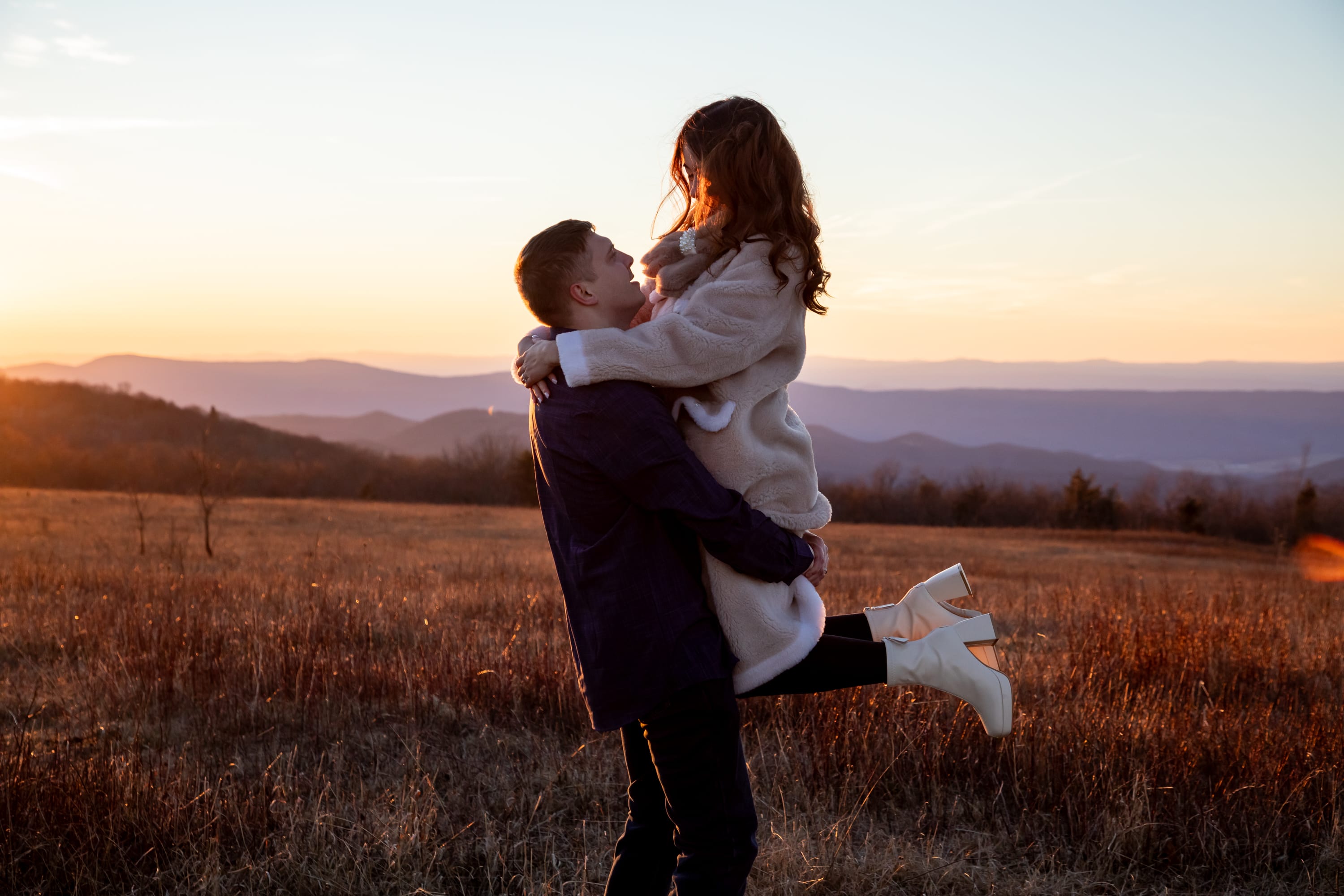
The light starts changing around two hours before sunset. Shadows get longer. Colors warm. By 45 minutes before sunset, the west-facing overlooks and ridges are doing something extraordinary — the light is horizontal, warm, and direct, raking across the rock face and turning everything a deep amber.
Sunset itself moves fast. You have maybe 15 minutes of direct golden light and then the afterglow — cooler, softer, pink and purple — which lasts another 30 minutes and can be even more beautiful than the main event.
The distinctive quality of Shenandoah sunset: West-facing locations — Blackrock Summit and west-facing overlooks scattered throughout the park — receive direct sunset light on their cliff faces. The Blue Ridge faces west at those spots, which means the rock you’re standing on glows. This is a different quality from the atmospheric light of sunrise; it’s direct, warm, and very dramatic.
Sunrise: the case for it
The mountain is yours. This is the single biggest practical advantage of sunrise. Hikers and day visitors don’t arrive until 8 or 9am. A summit that would have twenty people on it at 10am has zero at 6am. The ceremony location you’re sharing with strangers every other time of day is just yours.
The light is atmospheric. Mist in the valleys, color gradients across the sky, shadows still long and dramatic. Sunrise light has a quality of beginnings that photographs beautifully and tends to produce the most distinctive images of any elopement I photograph.
You’re done early. A sunrise elopement typically wraps by 9 or 10am. You have the entire rest of the day — brunch, a long drive, exploring a town, rest. Some couples tell me the afternoon after their sunrise elopement was the most peaceful time they’d had in months.
The 4am wake-up stops feeling terrible. This is universally reported by couples after the fact. The alarm is hard. But the drive into the dark is something else — the quiet roads, the forest coming into shapes around you, the way your body wakes up in a way it doesn’t with coffee. By the time you reach the trailhead, you feel alive in a way that’s hard to explain until you’ve done it.
Sunset: the case for it
The day is yours before you start. No pre-dawn anxiety. You get dressed at a reasonable hour. You have a real lunch. You’re relaxed when you arrive at the park because you’ve had a full day behind you.
West-facing locations are at their best. The light doesn’t just hit the view — it hits the rock you’re standing on. Blackrock Summit in particular catches the last direct light on its quartzite boulders in a way that’s hard to replicate at any other time of day. If your ceremony location faces west, sunset is almost always the right call.
The afterglow is long. After the sun drops below the horizon, there’s a 30–45 minute window of soft, diffused pink and purple light that wraps over the landscape. This period is often my favorite for portraits — the light is gentle and wraps everything evenly.
It photographs differently. Sunset elopements have a different feel in the images. Warmer, more settled, the kind of light that feels like the end of something. Some couples are very drawn to that quality and for them, sunset is just right.
Shenandoah Ceremony Spots by Best Light
Not every location in Shenandoah catches light the same way — east-facing summits glow at sunrise, west-facing ridges come alive at sunset. Here’s how the most popular ceremony spots break down.
| Location | Best timing | Why |
|---|---|---|
| Stony Man Summit | Sunrise | East-facing; receives sunrise light directly |
| Marys Rock | Sunrise | East-facing panoramic views of the valley |
| Big Meadows | Either | Open meadow catches light from multiple directions |
| Dark Hollow Falls | Either | In forest; less dependent on directional light |
| Blackrock Summit | Sunset | West and south-facing boulders catch last light |
| Bearfence Mountain | Either | 360° views; catches light from multiple angles |
What I actually recommend most often
For first-time couples without a strong preference: sunrise.
The emptiness of the mountain in the early morning is an experience that’s hard to replicate any other way. The light has a quality that feels specific and alive. And there’s something about being on a summit in the dark, waiting for the sun together, that has an emotional weight that I haven’t found a way to describe that isn’t diminished by trying.
For couples who have a specific location in mind: let the location decide. If you’re drawn to a west-facing overlook, do sunset. If you’re drawn to Stony Man or Marys Rock, do sunrise. The location should match the light.
For couples who genuinely cannot do the early alarm: sunset. Don’t push yourself into a 4am wake-up on your wedding day if it’s going to make you miserable. A sunset elopement is still an extraordinary experience and the photographs will be beautiful.
If you have a specific location in mind and want to talk through which timing would serve it best, that’s exactly the kind of thing I cover when couples reach out. You can learn more about how I approach Shenandoah elopements on my Shenandoah elopement photographer page, or read the full Shenandoah elopement guide for a deeper look at locations, permits, and logistics.
Tell me your location and season — I’ll give you a direct recommendation.
Let’s talkLimited availability for fall 2026. Inquiries for 2027 open now.
Guide written by Alysa Segovia — a Virginia elopement photographer who has shot both ends of the day in Shenandoah across all four seasons.
More Shenandoah elopement guides
- Shenandoah elopement photographer
- The complete Shenandoah National Park elopement guide
- What a Shenandoah elopement day actually looks like
- Stony Man Summit elopement guide
- Blackrock Summit elopement guide
- Big Meadows elopement guide
- When to plan your fall Shenandoah elopement
- Spring elopement in Shenandoah
Frequently Asked Questions
Is sunrise or sunset better for Shenandoah elopement photos?
Both produce beautiful photographs, but for different reasons. Sunrise gives you the mountain mostly to yourself and tends to produce more atmospheric light — mist, color gradients, a sense of something just beginning. Sunset gives you a longer, more relaxed day and the west-facing ridges catch the light directly. The right choice depends on your locations, your season, and honestly how you feel about a 4am wake-up.
How early do we need to arrive for a sunrise Shenandoah elopement?
Plan to arrive at your ceremony location 20–30 minutes before sunrise. For most trailheads that means leaving your inn or Airbnb 90 minutes before sunrise. In late October, sunrise is around 7:20am — so you're leaving by 5:45am. In May, sunrise is closer to 5:50am, which means a 4:15am departure. Both feel brutal until you're on the mountain.
Which Shenandoah locations are best for sunrise?
East-facing overlooks and summits catch sunrise directly, and these are scattered throughout the park — not just the north district. Stony Man and Marys Rock are strong options, and there are east-facing overlooks along Skyline Drive's full length. Big Meadows is more open and catches morning light from multiple directions. The key is knowing which direction a specific overlook faces before committing to it for sunrise.
Which locations are best for sunset?
West-facing locations are where sunset does its best work. Blackrock Summit is one of the strongest options — the quartzite boulders face west and catch the last direct light in a way that's hard to replicate at any other time of day. West-facing overlooks are scattered throughout Shenandoah, so the best approach is checking the orientation of your specific location rather than assuming by district.
Can we do both sunrise and sunset on our elopement day?
In theory, yes — but it's a long day. Some couples do a sunrise ceremony and then return to a west-facing overlook in the evening for portraits. This works best if you're staying inside the park or within 15 minutes of Skyline Drive. It's special, but build in rest time in the middle of the day.